
17 February 2026
One year of Activation Partners: Accelerating talent, ideas and the translation of breakthrough R&D
As we shape our approach for a second cohort of Activation Partners, Pranay Shah, ARIA Product Manager, breaks down what we learned from our first cohort and how the right partnerships are force-multipliers for long-term impact.
The why behind Activation Partners: our starting hypotheses
ARIA was set up to catalyse technological breakthroughs that will dramatically improve the lives of everyone in society – that’s why we back scientists and engineers to pursue research that’s too ambitious, counterintuitive or underexplored to be supported elsewhere.
But breakthroughs alone aren’t enough. They require the right conditions to be translated into world-changing capabilities – conditions that ensure discovery doesn’t get stuck in a lab but makes widespread social and economic impact.
When exploring how we could make these conditions a core part of our model, we worked from three core hypotheses:
1. Activating talent: The UK possesses a deep well of latent entrepreneurial talent which can be activated to create global change through R&D, provided the right platforms.
2. Building ecosystems: The primary bottleneck to societally impactful breakthroughs in the UK isn’t a lack of incredible science, but the relative lack of an ecosystem that seamlessly bridges the gap between a ‘high-risk idea’ and a ‘scalable organisation’.
3. Lasting impact: ARIA’s funding could catalyse new types of translational support for frontier R&D in the UK and these could build enough self-sustaining momentum to outlive ARIA’s direct support.
To test these hypotheses we made an informed yet highly-differentiated bet: that by providing fast, founding support and a clear vision, we could attract global organisations to commit people and resources to the UK to build bespoke translational infrastructure and activate talent.
This led to a new pillar of the ARIA model: Activation Partners – a set of partnerships designed to foster an environment that maximises the impact of ARIA-funded research, creating the conditions to drive progress.
The selection & negotiation process
In May 2024, we launched a call for our founding cohort of Activation Partners, aiming to attract global organisations to the UK to help build new translational infrastructure and unlock entrepreneurial talent around ARIA’s opportunity spaces.
We received almost 200 applications – spanning organisational-types, translational approaches and disciplinary focuses – showing the appetite from some of the best organisations in the world to work alongside UK talent and R&D.
“We knew the UK had extraordinary scientific talent and a lot of potential-founders sitting quietly in labs, but we saw a gap in the hands-on support needed to turn frontier research into companies. The Activation Partners call was a chance for us to support UK researchers much earlier than would have been possible. There simply weren’t other options willing to support this kind of high-risk, pre-company creation work.“
Seth Bannon, Founding Partner of Fifty Years
In soliciting applications, we set out our desired outcome: to propel ARIA’s opportunity spaces to greater impact. Instead of prescribing specific programmes or types of organisations, when it came to selection we focused on three core principles:
-
Strong track records of translating research into impact, a deeply technical focus, an appetite for the highly speculative and a founder- and researcher-first approach;
-
Clear commitment to the proposed plans and to running activity in the UK;
-
New and/or bespoke proposed activities, with evidence that they were unlikely to happen without ARIA’s support.
Organisations were selected not for their traditional credentials or size, but for their alignment with ARIA’s mission; their potential for catalysing activity in the UK that would not otherwise happen and how they complemented existing programmes across the ecosystem. We needed to enable partners to run new, experimental programmes that they had high conviction and evidence for. Our belief was that this would create an opportunity to build new talent pipelines, foster novel IP, and facilitate more investment within the UK R&D landscape, delivering new opportunities to turn breakthrough research into real-world solutions.
Our nine founding Activation Partners were announced in October 2024. They’re a diverse yet complementary group that spans the entire science innovation stack, from organisations backing ambitious entrepreneurial talent to those building entirely new R&D organisations. Some of them were already established in the UK, while others would go on to set up here for the first time.
The first year
In our original funding call, we defined success as “unlocking latent ideas, empowering talent, supporting promising new ventures, and providing insights and connectivity.” One year in, the impact from our Activation Partners is already showing that this model is working:
1. Unlocking latent ideas
One of the key aims of partnering with a handful of the world’s most ambitious R&D organisations was to increase the breadth of high-potential ideas pursued in our opportunity spaces – underexplored areas that we believe could transform society. Through intentional idea-sourcing and focused programmes, our partners have surfaced a broader set of ideas across these spaces, spanning different approaches, levels of maturity, and technical directions.
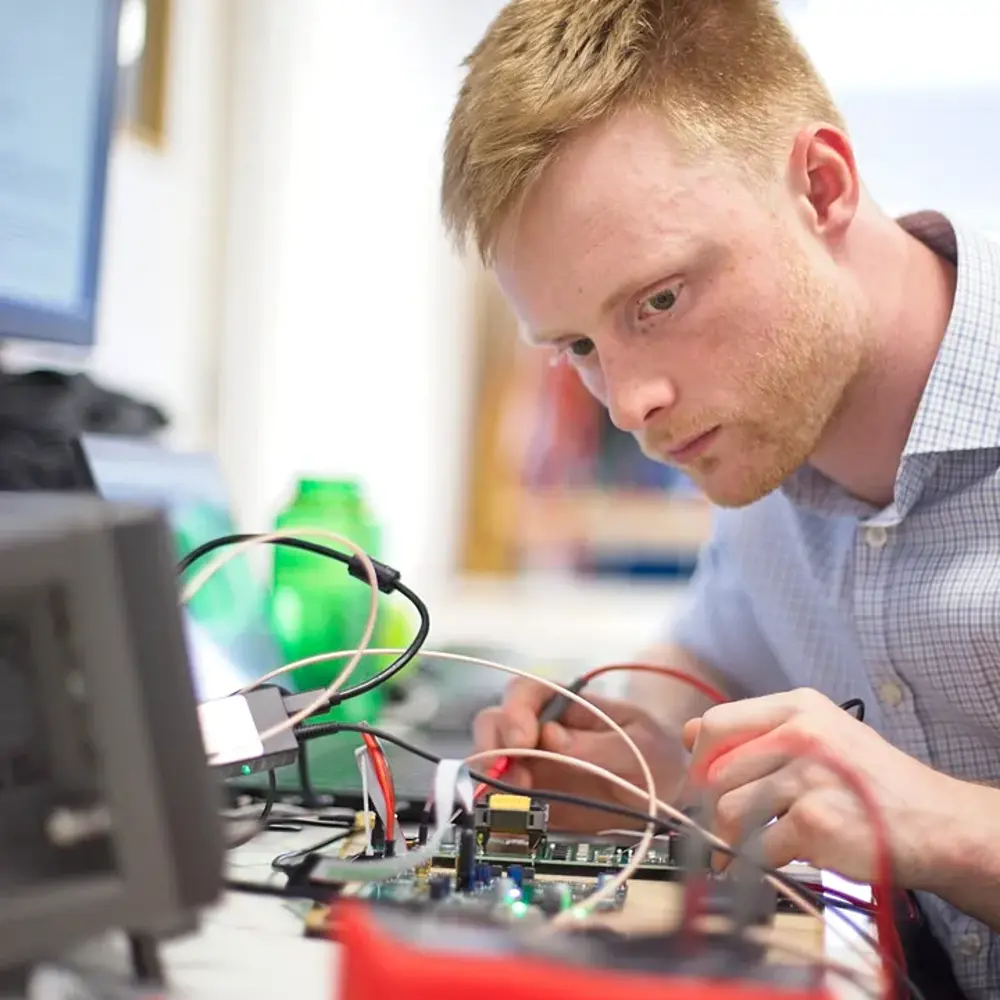
One of the main bottlenecks to exploring higher-variance ideas in deeply technical fields is hardware constraints. Often, the most ambitious scientific hypotheses require bespoke equipment that doesn’t exist. We selected Amodo Design as a founding Activation Partner to test if providing world-class engineering expertise could remove these blockers, allowing researchers to explore a greater volume and more wide-ranging ideas than traditional lab setups allow. Amodo’s work with ARIA’s research teams has exceeded our expectations: they’re currently supporting 32 ARIA-funded teams across a huge breadth of domains from robotics, high-throughput data pipelines, extreme environmental sensors, manufacturing assistance and clinical test equipment. This is proving that engineering is not just an ‘add-on,’ but a primary driver of scientific quality and speed. In their project with Sangtera on our Robot Dexterity programme, Amodo developed specialised hardware that allowed for more complex experimentation and accelerated research timelines by 6-12 months.
Our partnership with Pillar VC is enabling more high-potential ideas to be explored in our opportunity spaces by accelerating the application of advanced AI capabilities to frontier research through the Encode: AI for Science Fellowship. Encode is a one-year programme that places top-tier AI researchers within UK R&D labs to bridge AI and science with the goal of catalysing new technological capabilities. Signalling the strength of latent ideas, there were over 600 applications for the founding cohort and after only four months, the first 18 fellows have released 3 open source tools, initiated 20+ industry partnerships and seeded two proto-companies.
“It’s been incredible to see what happens when top AI talent is given total freedom to build something that matters. We hear time and time again from Fellows that the programme has opened up a path that didn’t previously exist – bridging industry and academia as well as AI and science.”
Leah Morris, Executive Director of Encode: AI for Science
2. Empowering talent
We’re also working with our Activation Partners to grow new entrepreneurial talent and upskill existing researchers working across our opportunity spaces. This is supporting ambitious researchers all over the UK to realise real-world benefits from their R&D.
Just one example is our partnership with Nucleate UK which is helping propel ARIA’s Programmable Plants opportunity space forward. By leveraging their bottom-up, grassroots model, Nucleate is cultivating a more active and connected entrepreneurial AgriTech ecosystem in the UK. Through ARIA’s support, they are expanding their ‘Eco’ pillar – dedicated to building community and startups focused on biotech entrepreneurship for climate and sustainability. In just one year, they have grown into six new cities across the UK, engaging over 4,300 researchers, with a 1,050% surge in applications to the Eco track of Nucleate UK’s Activator company-building programme. One sustainability-focused venture, Bind-Bridge, emerged from this cohort and has already successfully secured funding to push their R&D further.
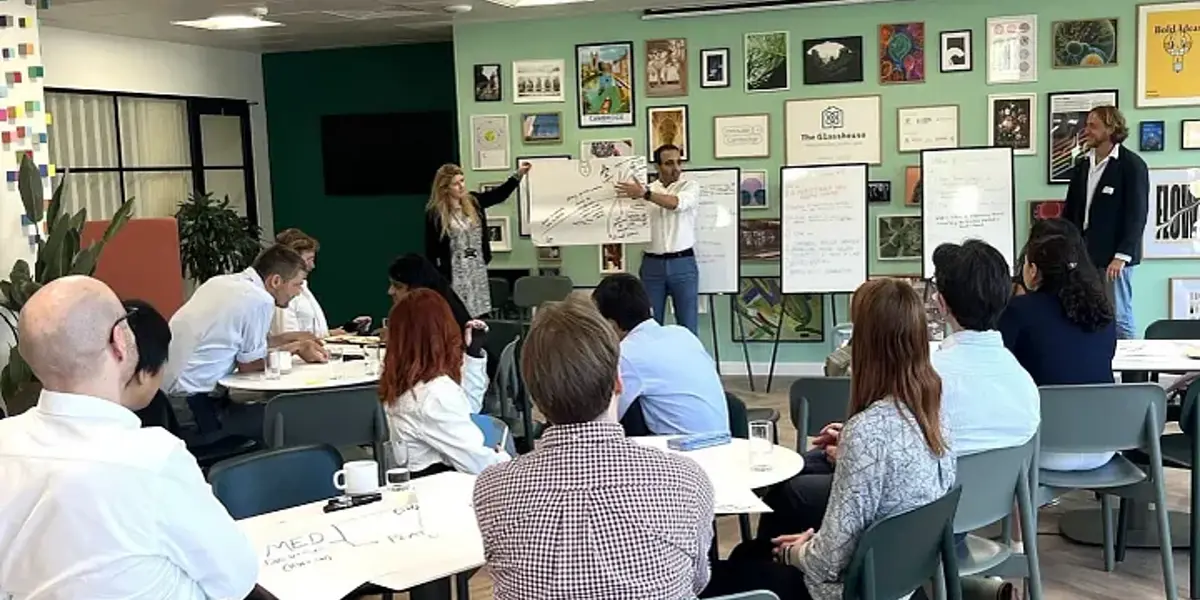
Similarly for neurotech, the bottleneck to translation is rarely a lack of ideas but a lack of environments where researchers feel safe taking high-risk, non-linear paths. Our Cambridge NeuroWorks partnership has created a nimble ‘innovation testbed’ designed to break down silos between engineering, neuroscience, and the clinic to ultimately accelerate breakthroughs within our Scalable Neural Interfaces opportunity space. The NeuroWorks programme focuses on granting researchers the ’permission to fail’ and has to date received close to 400 applications for their support in validating high-risk neurotech ideas. As a result, fellows are moving quickly from ideas to proof of concept to company formation, with several already securing follow-on funding for neurotech projects that might otherwise have stalled.
"Fellows consistently tell us that the programme has given them something they did not previously have: permission to pursue ambitious, high-risk ideas, alongside the support to pivot quickly and confidently when assumptions are challenged by our mentors who span research, entrepreneurial and clinical expertise."
Kristin-Anne Rutter, Executive Director at Cambridge University Health Partners
Our partnership with Renaissance Philanthropy has been driven by a joint conviction that the UK’s exceptional scientific talent can be accelerated by connecting fragmented networks together and building more structured pathways to translate bold ideas into breakthrough solutions. Over the past 15 months, Renaissance Philanthropy has launched the UK Horizons programme, directly engaging over a thousand scientists to build community through events, supporting talent through new funding mechanisms and creating new types of R&D organisations to take ideas out of the lab.
3. Supporting promising new ventures
Combining talent and high-potential ideas also requires the right infrastructure. We’re collaborating with partners with deep experience of building organisations that can take research from the lab to the real world, and they’ve already increased the volume of startups, types of R&D organisations, and diversity of founder-friendly capital across our research areas.
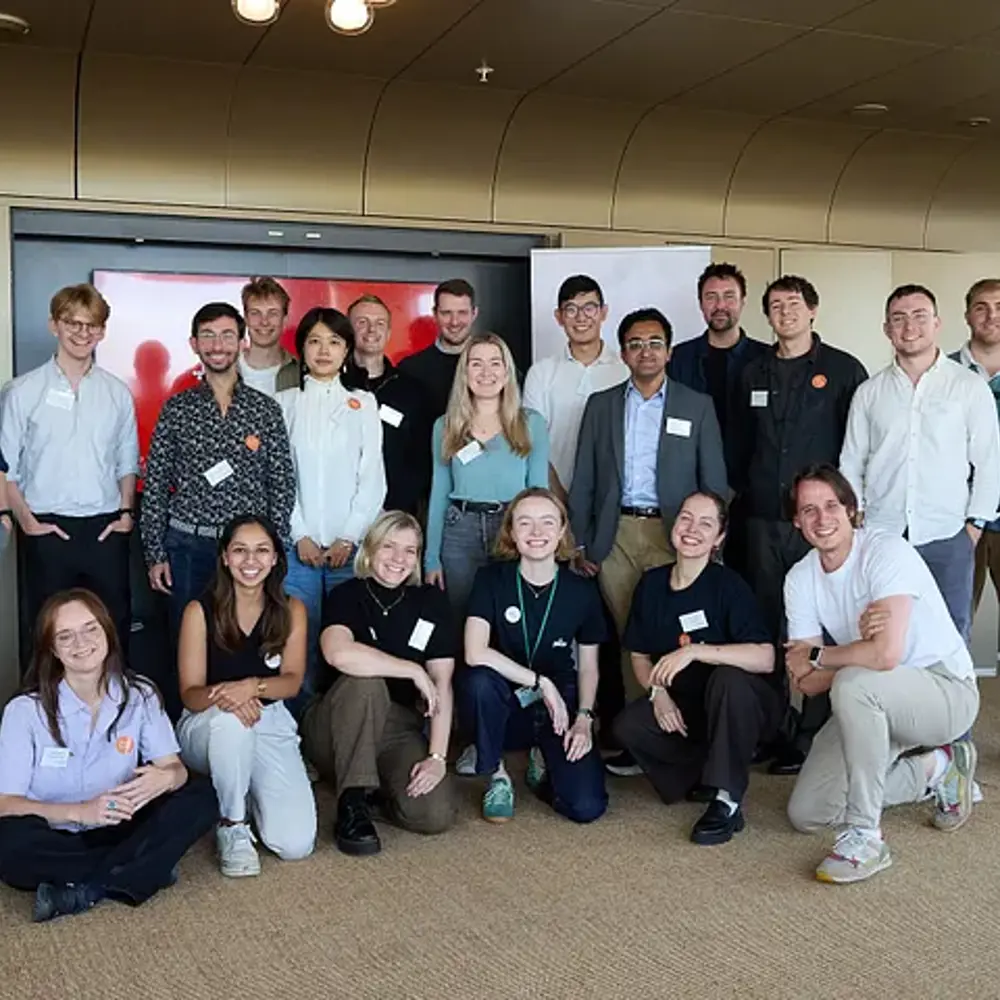
Our partnership with Fifty Years is designed to increase the number of successful startups in ARIA’s opportunity spaces by providing early, hands-on support to scientists before they incorporate companies – drastically raising the ambition and speed of the resulting startups. ARIA is supporting Fifty Years to deliver their deeptech company building programme, 5050, in the UK with a focus on our opportunity spaces. Over the first 15 months, 86 scientists and engineers have been supported through 5050 UK, resulting in 26 new companies that have raised over £7.5m in pre-seed funding. One researcher who entered the programme convinced their idea was ‘not venture-backable’ has since raised over £1m in pre-seed funding and is building their company full-time in the UK. This was enabled by the structured 5050 programme which gave them the conviction to pivot their narrative through technology validation and access to networks of experienced founders.
“Early support changes everything. If researchers are supported before they have founded ventures – through mindset shifts, validation, and hands-on help, they’ll move faster and aim much higher than they otherwise would have.”
Steph Avraamides, UK Lead at Fifty Years
Our Activation Partners initiative has also brought Convergent Research – pioneers of the Focused Research Organisation (FRO) model – to the UK for the first time. FROs are a startup-like model for public-goods science: fast moving organisations which pursue engineering-heavy R&D to unlock technical domains. We’ve set out to test whether FROs could uniquely unlock ARIA’s research areas and thrive in the UK. The first step was to build a structured ‘FRO residency’ model to help prospective-founders move from abstract scientific roadmaps to detailed FRO proposals. The demand for this new institutional model was immense; the open call received over 90 proposals in just weeks, far exceeding expectations and demonstrating appetite for large-scale, mission-driven research. The first iteration of the programme guided teams to develop scientific and organisational roadmaps to build UK FROs in ARIA’s spaces. From this, two teams have been selected for anchor funding from ARIA, with official launches planned in 2026.
“The pool of applicants to our FRO Founder Residency demonstrated incredible latent ambition in the UK with a genuine understanding of the scope and scale we sought... our hypothesis was that the FRO model’s core principles – startup-like operational speed and quantitative technical milestones – could work in the UK and fundamentally unlock ARIA’s opportunity spaces by bringing a new model for R&D.”
Anastasia Gammick, President & Co-Founder Convergent Research
4. Building community and insights
To succeed in catalysing the scale of impact we’re aiming for, we also need to create entirely new, highly-connected research fields within our opportunity spaces and build strong communities around them.
Our collaboration with Google DeepMind is seeding global ecosystems around AI for science futures in ARIA’s opportunity spaces. Through DeepMind’s Science 2030 initiative – a roleplaying strategy workshop simulating potential futures, decision-making tradeoffs, and cooperative and competitive dynamics – we’re bringing together leaders from government, technology companies, and scientific communities to explore the future of AI-driven science. By navigating simulated trade-offs of a rapidly shifting landscape, participants develop shared mental models of how AI-accelerated science may impact society. The workshop uses ARIA’s opportunity spaces as a roadmap, providing a ‘windtunnel’ for stakeholders to brainstorm responses to future breakthroughs. Our goal is to move beyond speculation, building agency and a deeper understanding of divergent incentive structures within a connected global community ready to steer AI toward responsible, high-impact scientific frontiers.
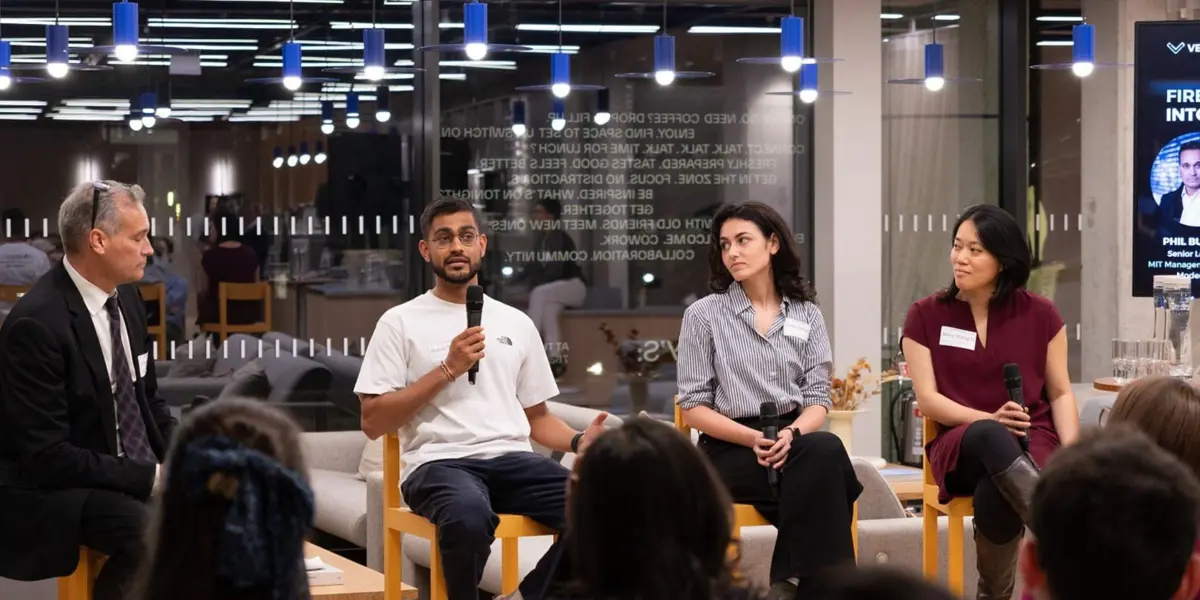
And with Venture Café we’re building the spaces in the UK to break down silos between academia, entrepreneurs, investors, policy-makers and industry. Venture Café’s Thursday Gatherings provide a regular, low-barrier-to-entry space for innovators to meet. In under a year, Venture Café has launched their first UK sites in London, Manchester, and Edinburgh. Across 30 gatherings, they’ve brought together a community that is now scaling toward 100 gatherings and 15,000+ attendees in the coming year.
“The breaking down of silos is intrinsic to what we do. Sparking unexpected connections and collaborations is displayed in the feedback we get at every event... We have brought together over 5,000 unique attendees in 6 months, opening up new opportunities from ARIA, the broader Activation Partner network and across the UK ecosystem to talent and organisations across the nation.”
Mike Jackson, Head of Venture Café UK
How ARIA works with our Activation Partners
For ARIA, the success of our partnerships goes beyond the outcomes of individual work streams, and includes both building a well-connected ecosystem and the integration of our partners into ARIA’s spaces. A key learning for us has been the value of feedback loops and collaboration.
Mirroring our approach to coordinating the R&D we fund, every quarter our partners check in with us to discuss what’s working, learnings, next steps, and where ARIA can support.
"ARIA’s greatest value has been their approach as a genuine partner in programme design. They’ve worked in the trenches with us – iterating on grant terms, providing constant strategic feedback, and making suggestions that directly strengthened the programme from day one. The active engagement of ARIA Programme Directors in our evaluation process also provided the 'institutional gravity' needed to convince world-class scientists that the UK is the best place to build a FRO. ARIA doesn’t just fund the work; they provide the strategic North Star that helps us attract and validate the highest-calibre talent."
Mary Wang, Head of Strategic Initiatives at Convergent Research
To ensure that the partnerships are more than the sum of their parts, we also organise regular collaboration sessions for partners to brainstorm their upcoming plans and ways of working together. Our partners also interact closely with the wider ARIA network at programme workshops and at events like the inaugural ARIA Summit in spring 2025, where we hosted an ‘Activation Partner Day’ for ARIA-funded researchers to attend masterclasses from our partners.
"The quarterly Activation Partner meets have been invaluable – not just for updates, but as a space to candidly explore joint experiments and collaborations. ARIA has functioned as connective tissue, enabling lateral access to resources and the cross-fertilisation of ideas across the entire network."
Ahmed Akbar, Programme Lead at Cambridge NeuroWorks
Beyond ARIA
We’re seeing this model resonate far beyond ARIA’s support. One of our earliest success indicators was an additional £5m committed by the UK’s Department for Science Innovation and Technology, doubling the number of fellows on Pillar VC’s Encode fellowships due to the quality of technical talent applying. This allowed more top-tier AI researchers to be placed in UK R&D labs and build frontier AI-for-science capabilities. Beyond the UK, global R&D agencies are also beginning to emulate our approach, with programmes first set up in partnership with ARIA now expanding internationally. Examples include Renaissance Philanthropy’s Frontier Research Contractor launchpad (FRCL). The FRCL is a programme piloted with us to facilitate the success of ARIA-style agencies by creating a new type of R&D organisation: the FRC. Several ARIA funded teams are taking their research to the real world by building FRCs. Reflecting their success, Eric Gilliam, the programme lead, writes on Success with ARIA: “ARPA-like agencies in other governments have also begun reaching out to discuss similar programs to serve their own needs.”
What we’ve learned
Our pilot has also surfaced learnings to inform our second call for Activation Partners and refine our current partners’ activities. We’re sharing these for others to build off and take into their own approaches.
A key learning for us came directly from partner feedback: they needed more bespoke partnerships. They told us their track records were built on operating differently from others in the ecosystem, and that we needed to enable those distinctive approaches to give them their best chance of success. We therefore stepped back and reoriented our partnerships approach to allow each organisation to execute in its own way, so they could provide the most value for us, and the UK. In practice, this meant spending time with each partner to better understand how they work, and adapting our own processes to collaborate more effectively. This shift is already paying off. Partners are working more seamlessly with us and focusing their energy on delivery.
We’ve also learnt the importance of intentional differentiation – building programmes for under-served talent and ideas requires experimentation beyond what already existed. Our partners have collaborated closely with each other to ensure that the events and programmes they run are bespoke and unique – like ideathons, salons, and community critiques. And where others in the ecosystem are attracting the right talent and ideas, we and our partners will collaborate, not duplicate, to ensure we’re always catalytic.
In addition, our partners are helping to connect complementary programmes across the UK ecosystem. We’ve seen that talented teams often move through bespoke programmes and then need highly tailored support for their next steps. Having built their initiatives from scratch, our partners are now working to create stronger pathways, linking this talent to the most relevant follow-on opportunities. This support will extend beyond their own networks, and we invite other organisations to engage with our partners to help build a more connected, collaborative ecosystem.
Looking ahead
Our current Activation Partners will be taking their learnings to move faster and more ambitiously into their programmes – creating even more opportunities for exceptional talent. Our partnerships are designed not to plateau, but to raise the ambition bar at each inflection point: meaning programmes with more support, bigger opportunities, and increased touch points to the wider ecosystem.
We’re also excited to share our early thinking for a second call of Activation Partners, and ask for input. Building on the early successes of the first cohort we’re looking to double-down on supporting the translation of frontier R&D from ARIA’s opportunity spaces through programmes supporting our research areas in everything from talent pipelines, engineering support to organisation building. In addition, we’re looking to build on the insights from our AI Scientists initiative by expanding the scope of our Activation Partners to include the application of advanced AI capabilities to R&D, such as AI for Science and AI Scientists. Our concept note details what we anticipate this second call looking like – read it and share feedback here.
Keep up to date
Visit our Activation Partners page to see live events and opportunities from our partners.
Discover monthly spotlights of our Activation Partners in our Substack and subscribe to stay updated.