
25 June 2026
HASH – making AI legible in the real world
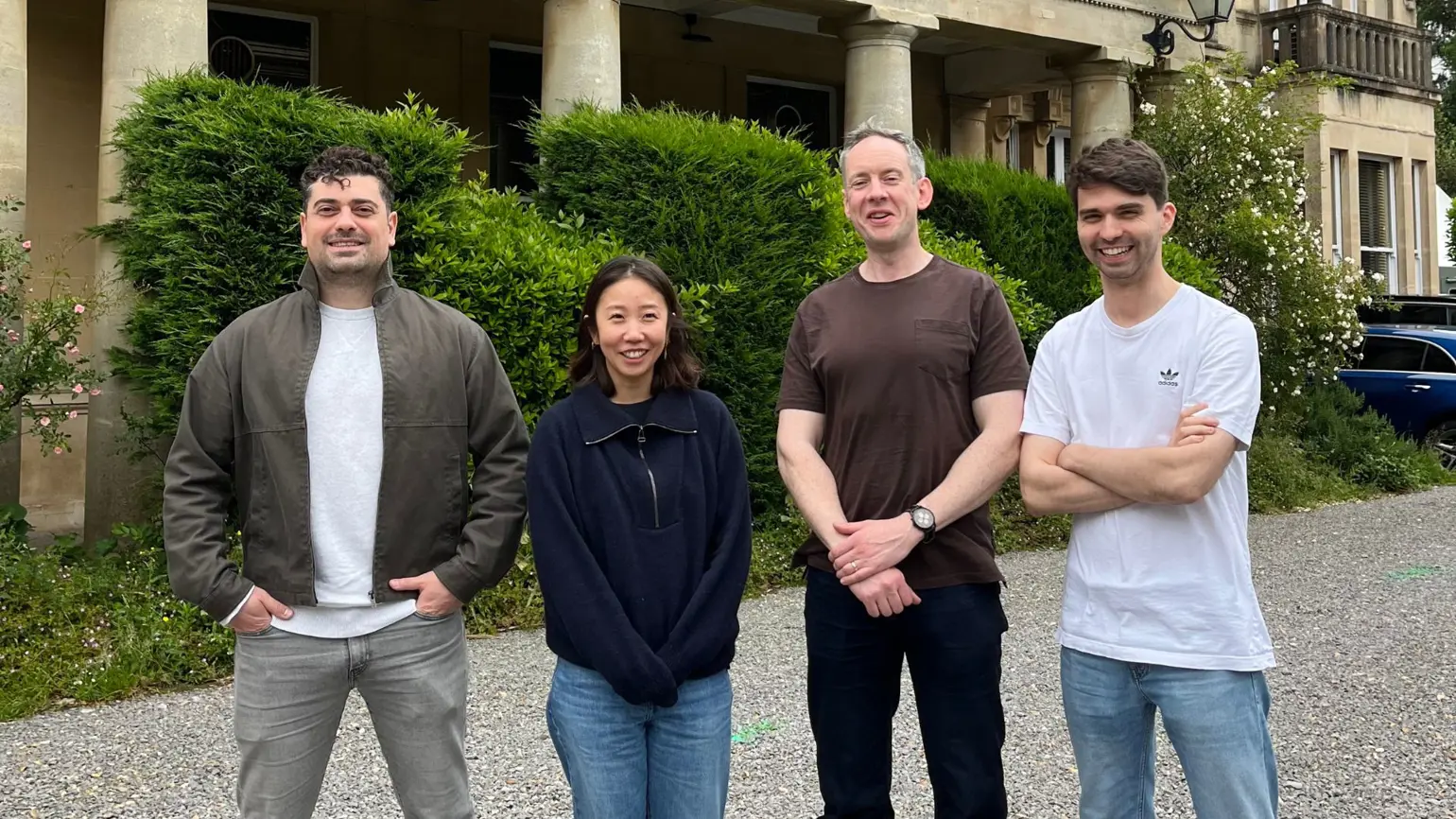
Chris, Dora, Ciaran and Dei from HASH (left-to-right)
HASH are a Creator team working across our Safeguarded AI programme, including on the interfaces that help people understand and trust mathematically grounded AI systems on supply-chain applications in biopharma. We spoke to founder and CEO Dei Vilkinsons and CTO Ciaran Morinan about messy real-world data, implicit knowledge, and what it takes to make Safeguarded AI usable.
Can you tell us a little bit about HASH?
Dei: We've been around since 2019 and have a platform that is sometimes compared to an open-source version of Palantir. HASH helps organisations bring together structured data and unstructured information from many different sources, turning it into a unified knowledge and process graph. That graph can then support automation, optimisation, and decision-making.
Through ARIA’s Safeguarded AI programme, we’re working on two connected challenges: applying this technology to safety-critical biopharmaceutical supply chains, and designing the interfaces people need to understand, trust, and work with these systems.
HASH is working across several parts of ARIA’s Safeguarded AI programme, from supply-chain applications to the user interface for the broader platform. How would you explain the common thread running through these projects?
Dei: Supply chains are horribly complex things. People often have a basic idea of how they think they work in their heads, and they look simple when you draw them as process charts, but they rarely work that way. In practice they are full of edge cases, exceptions, and recovery policies.
Our role is to help domain experts turn the tacit knowledge in their heads into formal models that can be simulated, tested, and used by AI systems without losing important context.
Ciaran: The common thread is that we're building on very technical foundations.
We build up from those technical foundations in a way that makes the actual solution understandable, accessible, and usable by normal, non-technical people. This involves figuring out how to take highly technical concepts and present them to users in a way that's familiar so they can actually trust that what is happening is correct and safe, without needing a 20-year career in academia.
Why is now a critical time for the work on the programme?
Dei: AI is obviously more prevalent than it was 25, 10, or even a couple of years ago. It's in use across more industries and being entrusted with ever more critical tasks, and it's both explicitly and unintentionally being baked into things. It might be finding its way into your supply chain, and you may not even be aware of all the ways it's being used. Having confidence in its output is really important.
There are whole categories of problems where frontier models today, out of the box, can do a really good job, achieving near 100% accuracy. But there are also problems where they might have 95-99% accuracy. In some contexts, 99% accuracy is acceptable - if a sales tool gets one name wrong in a hundred, it’s a little embarrassing, but no one dies. Whereas, if you're developing drugs or trying to make sure they get to the right place on time so a hospital doesn't run out of stock, 99% accuracy is not good enough.
Ciaran: I'd say as well as minimising risk, AI also presents a big opportunity. The programme’s core thesis is about both minimising risk by putting guardrails around the AI, and maximising the opportunity by building tools and systems that allow orchestrating AI agents at massive scale.
What makes supply chains a good testbed for Safeguarded AI, and what have you learned so far from working with real-world users and constraints?
Dei: Supply chains are a good testbed because they are inherently complex and have a social, economic, and technical element to them.
They are also everywhere. We’re starting in biopharma because it’s safety-critical, but the lessons should transfer to many other domains.
We’ve found that enterprise data is often messy, incomplete, or missing the decisions that actually shape how a system works. A lot of the important knowledge lives with domain experts. Without them, you cannot build realistic simulations or test whether an AI system is safe in practice.
Without people providing that expertise, it's not possible to create realistic synthetic environments and simulations for testing and probabilistically proving the safety of models. So there's a huge emphasis on how we can capture that domain expertise and work with people effectively.
Ciaran: There are also varying levels of appetite toward AI and other social barriers, especially with large organisations. They have their ways of working, and can be slow to adopt or adapt to new ones. We want to demonstrate value through the pilots we're running, leading with examples of what you can do through digital transformation and AI to make it look like a ‘no-brainer’. We want to show that it can be done safely and well.
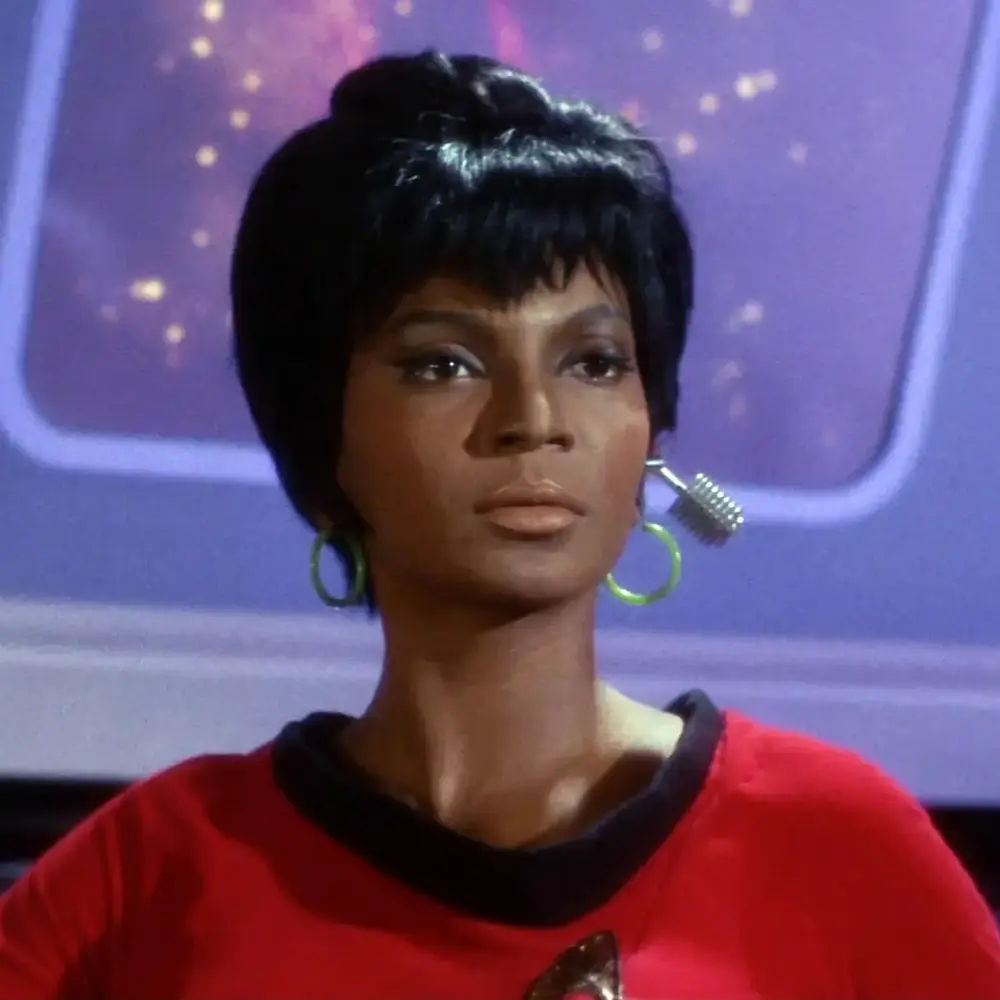
Nyota Uhura, or simply Uhura, is a fictional character in the Star Trek franchise.
UHURA, one of HASH’s projects, is about making Safeguarded AI usable: turning theory, backend systems and machine-learning capabilities into an interface people can actually work with. What are the hardest design challenges in building a human-centred interface for mathematically grounded AI safety?
Dei: The hard part is finding the right level of abstraction. A supply chain might look like a 10 step process, but in reality it may contain 50 steps, 20 branches, and multiple escalation policies. Different users, with different levels of technical abilities, and different needs, need to see different levels of detail.
Ciaran: There's a balance between the underlying complex system and not overwhelming the user with a thousand knobs and checkboxes. It's about allowing non-technical people to just get something done while also allowing technical people to ‘twiddle the knobs’ and access that underlying power.
Dei: The project name, UHURA, was inspired by the Star Trek character, Nyota Uhura. She was a translator who spoke 50 languages. Hopefully, this can be a universal interface to help AI and people communicate trustworthily.
A recurring theme in HASH’s work seems to be translation: between theory and practice, between different technical teams, and between AI systems and domain experts. What has surprised you about coordinating that ‘team of teams’ approach?
Dei: Most of the important things involved in these problems tend to be unstated. Things live in ‘latent space’ or are implicit, tacit knowledge in people's heads. Important factors are just not encoded formally anywhere, and we lack good ways of surfacing them today. This is what our interaction paradigms work is about, getting alignment between people and AI.
Ciaran: There's also the difficulty where different people use the same word to mean wildly different things. It can take a while to find out that when we both said ‘model’ or ‘specification’, we meant something completely different.
Which book, film, or TV show should people check out to understand your project better?
Dei: I've got to say Foundation by Isaac Asimov. Complex systems simulation to save the galaxy.
Ciaran: That's a good choice. We’re trying to use the predictive power of science for good.
Looking ahead, what would meaningful progress look like for HASH’s ARIA-funded work over the next year — both for SAILS in supply chains and for UHURA as part of the wider Safeguarded AI platform?
Dei: Over the next year, meaningful progress means moving from technical foundations into real-world applications. On the supply-chain side, we want to work with enterprises in safety-critical sectors such as biopharma, chemicals, defence, and food production.
More broadly, success means showing that Safeguarded AI can help people model complex systems, test decisions, and use AI with greater confidence in environments where mistakes matter.
Industry, government, or other potential partners should email dei@hash.ai to learn more about getting involved.